

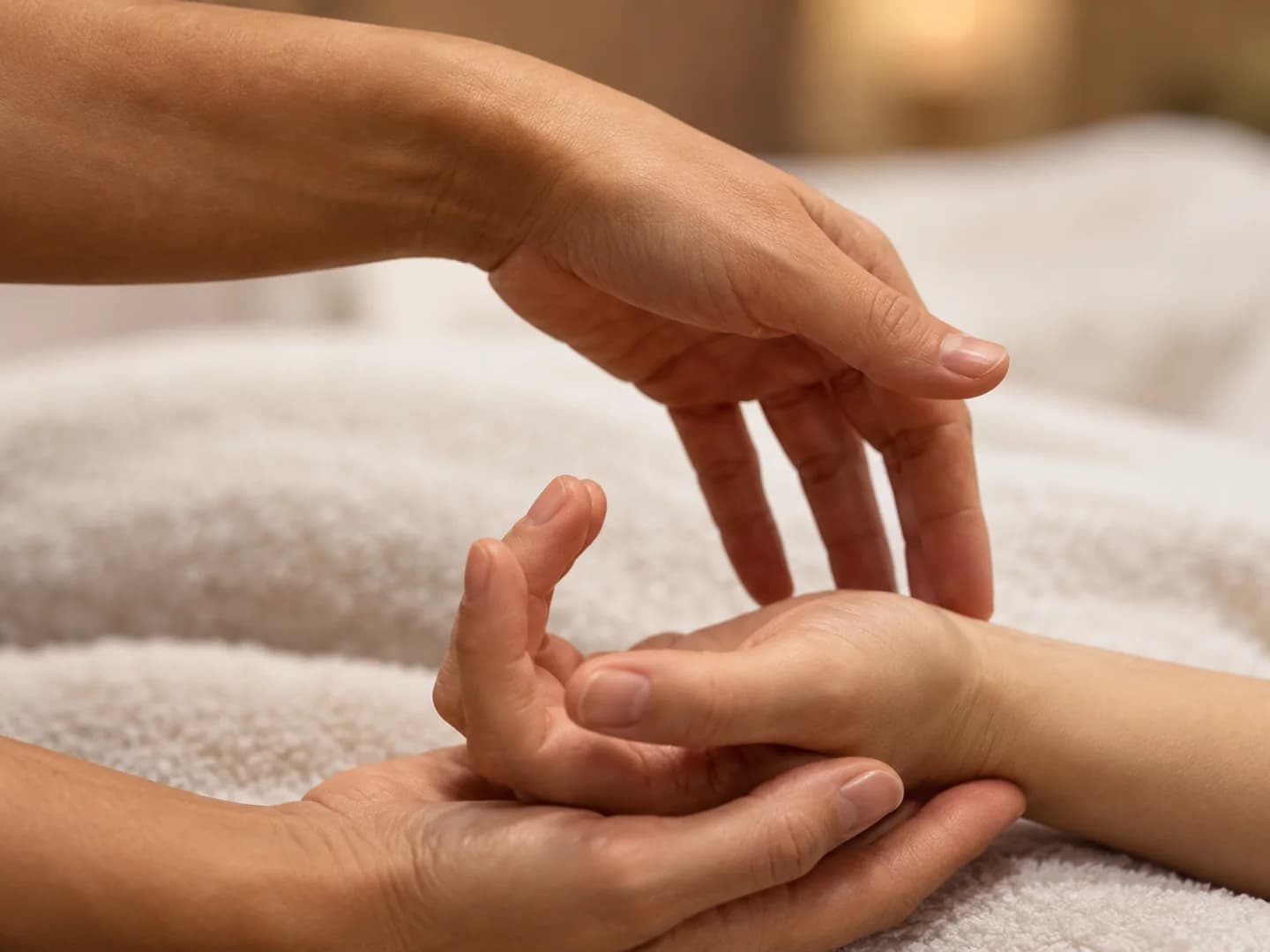
Why can a gentle stroke along the back or the familiar sensation of someone brushing your hair feel so absorbing? Researchers are exploring how touch connects sensation, emotion, attention, and our relationships with others.
Alongside this work, studies of ASMR are investigating the calm and tingling sensations some people experience in response to gentle sounds, movements, and personal attention. At The Tickle Bar, these everyday sensory experiences inspire a professional, strictly nonsexual relaxation service: an invitation to slow down and notice the present moment.
A sophisticated sensory pathway
Research led by Harvard Medical School neuroscientist David Ginty has helped map how specialized nerve cells detect touch and carry signals from the skin through the spinal cord to the brain. This work reveals the complexity behind everyday sensations, including light touch and vibration.
This illustration is educational, not a diagnostic or complete anatomical model.
Different nerves detect different sensations
Touch is actively processed
Sensitivity has a biological basis
The same gentle movement can feel comforting to one person, neutral to another, and uncomfortable to someone else.
Gentle brushing and pleasant touch
In a 2009 study, researchers measured nerve responses while softly brushing participants' skin. A group of sensory nerves called C-tactile fibers responded most strongly to strokes moving at roughly one to ten centimeters per second, the same range participants rated most pleasant.
Calm and sensory engagement
In a 2018 laboratory study, people who experience ASMR reported greater calmness while watching ASMR videos. Their heart rates fell by about 3.4 beats per minute on average while skin conductance increased, a combination of calm and sensory engagement. Sexual arousal was not a reliable outcome.
Touch is a serious area of wellness research
A 2024 review combined evidence across many controlled studies and found overall benefits associated with touch interventions, including reductions in adult pain, anxiety, and depressive feelings. The studies covered varied interventions and frequently involved massage.
The review establishes touch as a meaningful field of research. It does not establish that Tickle Bar's light-touch relaxation sessions deliver the same clinical outcomes.